By Ramtin Kassir, M.D.
Introduction
New York Facelift Decision Guide
A facelift is one of the most widely performed and effective plastic surgery procedures worldwide, even offering a range of advanced techniques tailored to each patient’s anatomy, goals, and stage of aging. Whether addressing deep facial folds, significant jowling, or early skin laxity, a facelift restores structural support and definition while preserving your natural appearance.
Triple board-certified facial plastic surgeon Dr. Ramtin Kassir performs customized facelift procedures for patients in Manhattan, New York, New Jersey, and from around the world. His specialized expertise in facial surgery allows him to deliver refined, natural-looking results that restore youthful contours while maintaining each patient’s unique identity.
This guide is designed to help you understand the differences between facelift techniques, identify which approach may be most appropriate for your stage of aging, and make an informed decision before your consultation.
Quick Selector
While there is so much more involved when deciding on your facelift surgery, these three questions are very important to answer, even before your consultation.
How much downtime are you prepared for: days, weeks, or longer?
Which area concerns you most: cheeks, jawline, neck, or full face?
Are you seeking subtle early correction or a more comprehensive rejuvenation?
1. What is YOUR Focus?
Early Signs of Aging/ Mild Sagging
Early aging typically involves mild laxity without significant structural descent.
Best options may include:
Best for patients experiencing:
- Mild cheek descent
- Early nasolabial folds
- Early jowling
- Mild loss of facial definition
- Good skin elasticity
Benefits
- Smaller incisions
- Faster recovery
- Subtle, natural improvement
- Structural correction before aging becomes advanced
Midface-Focused
Midface aging occurs when cheek volume decreases, leading to flattening, hollowing, and deepening of the folds around the nose and mouth.
Best options may include:
Best for patients experiencing:
- Flattened or deflated cheeks
- Under-eye hollowing
- Deep nasolabial folds
- Tired or sunken appearance
Benefits:
- Restores youthful cheek volume and contour
- Improves under-eye support
- Softens deep folds naturally
- Provides longer-lasting structural improvement
Lower Face and Jawline
Aging in the lower face affects jawline definition, leading to jowls and neck laxity due to tissue descent.
Best options may include:
- Lower facelift
- SMAS facelift
- Deep plane facelift
- Neck lift (when needed)
Best for patients experiencing:
- Jowls
- Jawline blurring or heaviness
- Loose skin along the lower face
- Early neck sagging
Benefits:
- Restores jawline definition
- Eliminates jowls
- Improves lower facial contour
- Produces natural, long-lasting improvement
More Comprehensive Facial/ Neck Rejuvenation
A comprehensive facelift addresses advanced aging throughout the face and neck by repositioning underlying anatomical structures rather than just tightening the skin.
Best options may include:
- Deep plane facelift
- Advanced SMAS facelift
- Facelift combined with neck lift
Best for patients experiencing:
- Significant jowls
- Deep nasolabial folds
- Loss of jawline definition
- Neck laxity or banding
- Global facial aging
Benefits:
- Corrects aging at its structural source
- Restores jawline and neck contour
- Produces the most dramatic and longest-lasting results
- Creates natural rejuvenation without a pulled appearance
Non-Surgical Options
Non-surgical treatments improve early aging and help maintain surgical results, but cannot reposition deeper structures.
Best options may include:
Best for patients experiencing:
- Mild volume loss
- Fine lines and wrinkles
- Early skin laxity
- Desire to delay surgery
Benefits:
- Minimal downtime
- Non-invasive treatment
- Temporary improvement
- Useful for maintenance and early intervention
2. Consider Downtime & Recovery
- Minimal downtime (a few days): Non-surgical treatments such as fillers, neuromodulators, and thread lifts typically require little to no downtime. Patients may experience mild swelling or bruising, but can usually return to normal activities quickly.
- Moderate downtime (1-2 weeks): Mini-facelifts generally require 7-14 days of recovery. Swelling and bruising will be present but steadily improve. Most patients can typically return to work and social activities after a few weeks.
- Longer recovery (2-3+ weeks): More comprehensive procedures, such as deep-plane and full SMAS facelifts, require a longer recovery period because they involve deeper structural correction. Initial swelling improves significantly within 2-3 weeks, with continued refinement over several months.
3. Evaluate the Surgical Complexity vs. Your Individual Needs
- Least complex: Non-surgical treatments offer minimal invasiveness and downtime but provide temporary improvements and cannot correct structural sagging or advanced aging.
- Moderate complexity: Mini-facelifts provide meaningful improvement for select patients with moderate aging. They involve less extensive dissection and shorter recovery, but do not address deeper anatomical changes as comprehensively.
- Most complex / longest-lasting: Deep plane and advanced SMAS facelift procedures reposition deeper facial structures, offering the most comprehensive correction and the longest-lasting results. These procedures address the underlying causes of aging rather than surface-level changes.
4. Check Your Eligibility
Age & Skin Laxity
- Mild sagging: Patients with early signs of aging and good skin elasticity may benefit from non-surgical treatments or mini-facelift procedures.
- Moderate: Moderate skin laxity, jowls, and facial descent are typically best addressed with an SMAS or deep plane facelift for structural correction and longer-lasting improvement.
- Advanced: Patients with significant facial sagging, deep folds, and neck laxity are often the best candidates for comprehensive facelift procedures that address multiple anatomical layers.
Medical Considerations
Good candidates are generally in overall good health, do not smoke or are willing to stop, and do not have medical conditions that impair healing. A consultation evaluates facial anatomy, skin quality, and overall health to determine the safest and most effective approach.
Expectations
As with any cosmetic surgery, it’s important to maintain realistic expectations and understand that facial rejuvenation restores a more youthful version of oneself rather than creating a different appearance. The goal is natural, balanced improvement that preserves facial identity.
5. Longevity of Results
- Permanent: Surgical facelift procedures reposition deeper facial structures, creating long-lasting improvement. While aging continues, results often remain visible for 10–15 years or longer.
- Temporary: Non-surgical treatments typically last several months, but can last up to two years, depending on the treatment type. Non-surgical treatments will require ongoing maintenance to maintain results.
6. Budget Considerations
- Lowest: Non-surgical treatments have lower upfront costs but require ongoing maintenance treatments.
- Moderate: Mini-facelifts provide targeted correction with less surgical complexity.
- Moderate–High: SMAS facelift and traditional surgical facelift procedures offer substantial improvement with long-term benefits.
- Highest cost: Deep plane facelift and comprehensive surgical rejuvenation involve advanced techniques and provide the most dramatic and longest-lasting results.
These are approximate trends for the area and not exact pricing. The best way to find out how much your treatment will be is to schedule your private consultation with Dr. Kassir.
A Personalized Approach to Facial Rejuvenation
There is no single facelift technique that is universally appropriate for every patient. Effective facial rejuvenation requires selecting the procedure that addresses the specific anatomical structures responsible for visible aging. Superficial treatments may improve early signs, but meaningful and lasting rejuvenation requires repositioning deeper structural support when appropriate.
Through comprehensive evaluation and specialized expertise in facial plastic surgery, Dr. Kassir determines the precise technique necessary to restore youthful facial contours while maintaining natural expression and identity. This individualized approach ensures results that appear refined, balanced, and enduring.
Schedule your facelift consultation today, and our team will happily help you get started on turning back the effects of time!
Exploring Facelift Techniques Further
Revision Facelift vs Primary Facelift
Performing a facelift correctly the first time saves patients time, money, and stress by avoiding the need for a revision facelift.
A primary facelift:
- It is designed to address moderate to severe signs of aging in the lower two-thirds of the face and neck
- Improves signs of aging, such as sagging skin, deep creases, and jowls
- Produces significant, long-term results and does not stop the natural aging process
A revision facelift:
- Corrects issues that arose from a primary facelift
- It is more complex, as the technique works with tissue that has already been altered
- Should only be performed on individuals who have already received a facelift
Is a Deep Plane Facelift Really Better?
A deep plane facelift is appropriate for individuals with moderate to severe signs of aging, such as significant jowls, deep nasolabial folds, midface and neck ptosis, and for comprehensive rejuvenation to achieve long-lasting results. Dr. Kassir will determine if this technique is best for you during your consultation.
Why “Mini-Facelifts” Often Disappoint
Mini-facelifts are best suited for individuals with mild signs of facial aging, such as mild-to-moderate skin laxity, jowls, and excess skin. Mini-facelifts may disappoint because:
- Your anatomy would better benefit from a more dramatic procedure
- The results are short-lived, so signs of aging return sooner
- They only focus on skin tightening rather than correcting deeper facial muscles
- You may need a revision facelift
During your consultation with Dr. Kassir, you will discuss all possible facelift options to determine which procedure will best benefit you.
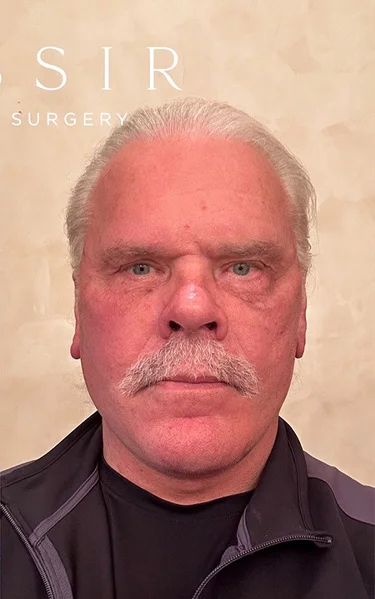
Facelift for Men: Key Differences and Pitfalls
Though a facelift offers several of the same benefits for men and women, men differ in:
- Skin thickness (thicker)
- Hairline patterns
- Beard growth
- Scar visibility (can hide with a beard)
Mistakes in men can appear obvious because they have thicker, more vascular skin, shorter hairstyles, and consistent hair growth. A male facelift is designed to preserve masculine features, such as a strong, defined jawline, and avoid a feminine appearance. Male facelifts require:
- Conservative vectors
- Respect for masculinity
- Scar camouflage expertise
Deep Neck Lift vs Traditional Neck Lift
Determining which procedure to address your neck signs of aging depends on your goals and individual anatomy. A traditional neck lift is designed to:
- Tighten skin
- Correct sagging
- Address the platysma, a broad sheet of muscle fibers extending from the collarbone to the angle of the jaw
A deep neck lift addresses:
- Subplatysmal fat
- Digastric muscles
- Glandular bulk
- Structural neck anatomy
Ideal candidates for a deep neck lift have:
- Heavy necks
- Full submental anatomy
- Genetic neck aging
Candidates need depth rather than surface-level tightening, which is performed during a traditional neck lift.
FAQs Following Facelift Surgery
-
A well-performed deep plane facelift typically provides 10-15 years of structural improvement. Natural aging continues, just from a better starting point. You will still need to take some steps to maintain the results, including:
- Skin care
- Energy devices
- Injectables
- Lifestyle choices
-
One of the main reasons why a facelift fails to achieve your goals is when the plastic surgeon ignores or misjudges your facial anatomy. A failed facelift is extremely unlikely when performed by a highly experienced, triple-certified facial plastic surgeon such as Dr. Kassir. A failed facelift includes:
- Only tightening the skin
- Ignoring deeper ligaments
- Under-addressing the neck
- Overpromising minimal downtime
- Treating aging as superficial
Aging does not occur solely on the skin’s surface. It also occurs in your:
- Bones
- Fat
- Ligaments
- Muscle
If a surgery only addresses the skin, the results will look:
- Pulled
- Short-lived
- Unnatural
-
Patients often prefer to avoid being seen in the early stages of recovery after a facelift because of swelling and bruising. Here are a few ways you can blend back into public life with less stress:
- Wear dark glasses
- Style your hair forward
- Wear scarves
- Choose lighting intentionally
- Wear makeup after incisions are healed, not before
Regardless of how much you try to hide the swelling and bruising after your facelift, it’s important to remain patient throughout the healing process, as the side effects are temporary.
-
Facelift scars result from incisions that allow surgeons to access, lift, and reposition underlying facial muscles and tissues, remove excess skin, and create a rejuvenated appearance. Good facelifts hide scars in the hairline, within the natural folds of the ears, and along the contour of the earlobes. Scars are influenced by:
- Incision placement
- Direction and force, the underlying muscles, fat, and skin are lifted
- Skin biology
- Surgeon’s ability to create natural-looking results
Bad scars are highly unlikely after a procedure performed by an expert facial plastic surgeon like Dr. Kassir. If bad scars do form, they often come from:
- Over-tightening skin
- Poor incision design
- Ignoring hairlines
-
Whether you’re flying on a plane to visit family, go on vacation, or travel for work, you should consider the timing between your facelift surgery and your flight. Flying after a facelift is generally safe, depending on the depth of surgery, the extent of dissection, and the individual’s postoperative recovery.
The deep plane facelift is the most dramatic and intense facelift procedure; therefore, you should be aware of the potential risks of flying after undergoing this procedure. Flying increases facial swelling due to cabin pressure changes, risk of fluid accumulation, and discomfort from prolonged sitting and dehydration. For most deep plane facelift patients, Dr. Kassir recommends:
- Avoiding flying for 7-10 days after surgery
- Waiting 10-14 days to fly on longer or international flights
Rushing travel can often lead to prolonged swelling, increased tightness, and anxiety. These concerns can become more serious if they occur mid-flight with no access to Dr. Kassir, so it’s crucial to wait the recommended time before flying. We understand that travel is sometimes unavoidable, so we recommend mitigating risk with compression garments, increased hydration, early ambulation, and advance planning to ensure medication is available.
-
Sleeping position is one of the most underestimated aspects of the recovery process. Improper positioning can significantly affect outcomes and healing and may lead to short- and long-term complications. For the first 2-3 weeks, patients should sleep and rest on their back, elevating the head about 30-45 degrees. Patients should also avoid sleeping on their side or stomach to prevent one side of the face from healing faster, shifting the healing tissues, and resulting in asymmetry.
After 3-4 weeks, it is usually safe to sleep on your side; however, you should wait at least 6 weeks before sleeping on your stomach. Sleeping on your back temporarily may be beneficial for achieving symmetrical, longer-lasting results.
-
Exercise is an essential way to boost blood circulation, reduce swelling, and prevent blood clots, but exercising too early can be detrimental to outcomes, safety, and health. The goal is to heal efficiently and safely for long-term results rather than recover as quickly as possible.
Here is the general timeline you should follow after your facelift:
- Week 1–2: Go on short walks
- Week 3: Light cardio (no bouncing/ straining)
- Week 4–6: Gradual return to resistance training
- After 6 weeks: Full activity
It’s important to follow the general exercise timeline because:
- Increased blood pressure can cause bleeding
- Strain disrupts healing ligaments
- Swelling lasts longer