One of the most common questions that prospective facelift patients ask is “What is facelift recovery like week to week?” The healing process after facial plastic surgery can feel intimidating, so curiosity is only natural. Patients who undergo a mini facelift, deep plane facelift, or facelift combined with procedures such as eyelid surgery or fat transfer may experience a slightly different recovery timeline. Dr. Kassir will provide personalized instructions based on your specific treatment plan.
To help patients understand the recovery timeline, we’ve assembled a handy week-by-week guide. Note that recovery differs depending on the type of facelift you undergo, since techniques vary in degree of invasiveness. The following timeline is based on a full SMAS facelift.
Facelift Recovery At-A-Glance
Timeline
What To Expect
First 24 Hours
Rest at home, drains in place, swelling and bruising begin
Bruising and swelling peak, incisions healing, avoid exercise
Week 2
Sutures removed, makeup may be worn, many patients feel comfortable going out again
Week 3
Most swelling improved, many patients return to work and normal daily activities
Week 4
Bruising largely resolved, light exercise often resumes with surgeon approval
Week 5-6
Heavy exercise usually permitted, facial movement feels more natural
3-6 Months
Final facial contours continue settling
Up to 12 Months
Scar maturation and complete healing continue.
Your Recovery Timeline Breakdown
Week 1
After your facelift, a friend or family member will drive you home once you’re cleared to leave safely. You’ll have light bandages covering your incisions, along with small plastic drains to carry out excess fluid. Anesthesia will wear off gradually.
You’ll experience bruising, swelling, and tightness after a facelift; these will be most prominent during the first week. Numbness, discomfort, or tenderness may also be present. To minimize swelling, keep your head elevated above your heart at all times, even overnight. Sleep on your back to avoid damaging your incisions.
You’ll need to take pain medication as prescribed to address any pain or discomfort during this first week. You’ll also need to take antibiotics as prescribed, apply cold compresses to reduce swelling, and clean your incisions daily as instructed.
The day after your facelift, once the surgeon has removed your drains at a follow-up visit, you’ll be able to resume washing your hair. It’s best to wash your hair gently to avoid damaging your incisions. Use baby shampoo instead of regular shampoo to avoid harsh ingredients.
To help your body heal, make sure to stay well hydrated. Eat foods that are high in nutrients and low in sodium. Don’t do anything that could increase your blood pressure, and if you’re feeling jaw discomfort, stick to a soft-food diet.
In around 3 days, you’ll be able to start walking around your home again. Make sure to walk around at least 3 to 4 times daily; this will promote proper blood circulation, which will reduce the likelihood of blood clot formation. Avoid all other forms of exercise.
Make sure to keep your incisions hidden from direct sun exposure during the healing process. This will encourage them to blend well with the surrounding skin.
Week 2
At the beginning of week 2, you’ll need to come to our Manhattan clinic for a follow-up appointment to have your sutures removed.
For most patients, week 2 feels like a turning point in the healing process. Post-surgical bruising, tightness, and swelling will begin to decrease, and you may start to feel a bit more like yourself. Once cleared by your surgeon, you’ll no longer need to sleep with your head elevated.
You’ll be able to get back to performing lighter household chores during week 2. You may also be cleared to start working from home, provided your job allows for it.
Patients tend to feel more comfortable going out in public again 10 to 14 days after the procedure. Because some swelling will still be present, you may prefer to hide it by wearing sunglasses, a scarf, or a hat. Make sure the hat doesn’t put pressure on your facelift incisions.
Additionally, since you’ll no longer be taking prescription pain-control medication by this point, you’ll be able to start driving again safely.
Once 10 to 14 days have passed, your incisions will most likely have closed. This means you’ll be able to safely wear makeup again, which can help reduce the appearance of post-surgical bruising. It’s best to avoid applying makeup directly over incisions.
Week 3
By this point, most patients have experienced a significant reduction in swelling, with approximately 80% having resolved. Residual neck swelling may remain, along with residual puffiness in other parts of the lower face. Minor healing-related asymmetries may still be present. Your face will feel less tight, slowly restoring the ability to form more natural-looking facial expressions.
Provided your job isn’t especially physically strenuous, you’ll most likely be cleared to return to your workplace. You may be feeling a bit impatient at this point in the healing process, since you won’t be seeing visible progress at the same rate you once were. Although healing progresses more gradually after the first few weeks, your results will continue to improve with time.
Week 4
Most bruising disappears by week 4, and any remaining bruises usually appear yellow. Subtle swelling and tightness may still be experienced, but your jawline and cheeks will begin to look more normal again. Your incisions might appear pink or raised, and though their external healing is mostly complete, they are still undergoing internal healing.
This is the week when you might start feeling more comfortable as you cautiously return to social activities. Many patients begin to regain their confidence in their appearance. You may also be cleared to resume wearing earrings.
By the end of week 4, patients can typically return to light and moderate exercise. Make sure your surgeon has cleared you to return to these activities before doing so.
Weeks 5 and 6
Final swelling begins to fade around this time, and any subtle asymmetries will be unnoticeable. Facial movements and expressions will feel much more natural. By this point, you’ll have fully returned to your normal social life and routines.
By week 6, you’ll most likely be cleared to resume heavy exercise routines, heavy lifting, and playing sports. You can also get gentle facial massages if you are cleared for them; these massages encourage lymphatic drainage.
Months 2 Through 12
Once 3 months have passed, any remaining tightness or numbness will be gone, and sensation in the treated areas will have returned to normal.
In 3 to 6 months, the contours of your face will have settled, and you’ll be able to enjoy your final facelift results. Post-surgical marks will fade over time. In certain cases, it can take up to a full year for all subtle swelling to fade and for post-surgical marks to completely fade.
Get Your Personalized Facelift Recovery Timeline
For a personalized facelift recovery timeline, you’ll need to meet with Dr. Ramtin Kassir at our Manhattan clinic. Dr. Kassir, a triple-board-certified facial plastic surgeon serving the New York and New Jersey area, will work with you to plan out your facelift procedure. After this, he will discuss your projected healing timeline with you in detail. Contact us today for your consultation.
Facelift Recovery FAQ’s
Most patients can gently wash their hair the day after surgery once their drains have been removed. Your surgeon will explain how to avoid putting tension on the incision sites during washing.
For the first one to two weeks, patients should sleep on their back with their head elevated to help minimize swelling. Once your surgeon approves, you can gradually resume your normal sleeping position.
Driving is typically safe once you are no longer taking prescription pain medication and can comfortably turn your head. For many patients, this occurs during the second week of recovery.
Most patients can begin wearing makeup about 10 to 14 days after surgery, provided the incisions have closed. Makeup should not be applied directly over healing incision lines until your surgeon confirms it is safe.
Walking is encouraged within the first several days to promote circulation. Light exercise often resumes around four weeks, while more strenuous workouts and heavy lifting are usually delayed until approximately six weeks after surgery, depending on your healing progress.
While many patients look socially presentable within two to four weeks, subtle swelling continues to improve over several months. Final results are typically appreciated between three and six months, with scar maturation continuing for up to one year.
Join the 1 million + redefining elegance—one transformation at a time.
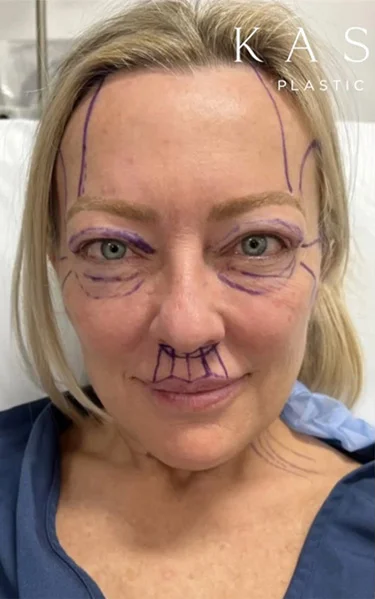
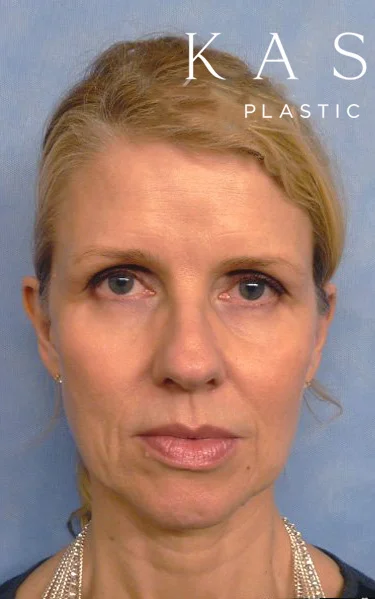
Before
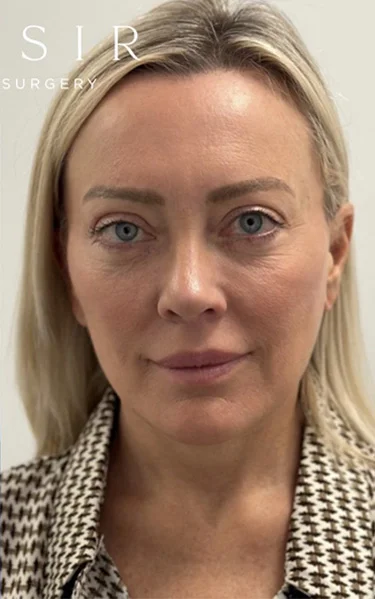
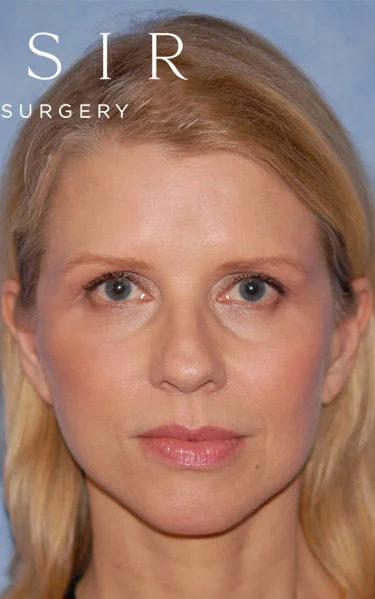
After
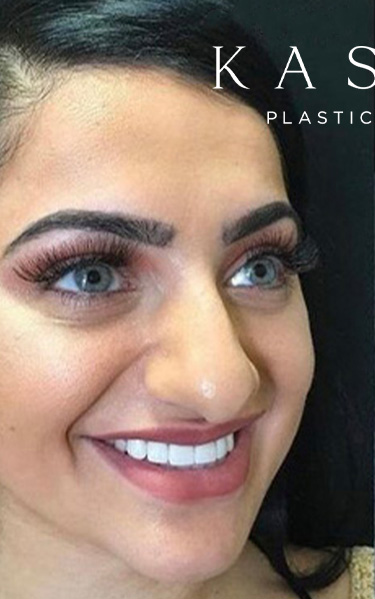
Our lovely patient only one month after a Rhinoplasty.
See the amazing result.
Age: 51
Gender: Female
Procedure: Extended Deep Plane Face & Neck Lift and Endoscopic Forehead Brow and Temporal Lift, Upper & Lower Blepharoplasty, Septo-Rhinoplasty, and CO2 Laser Resurfacing
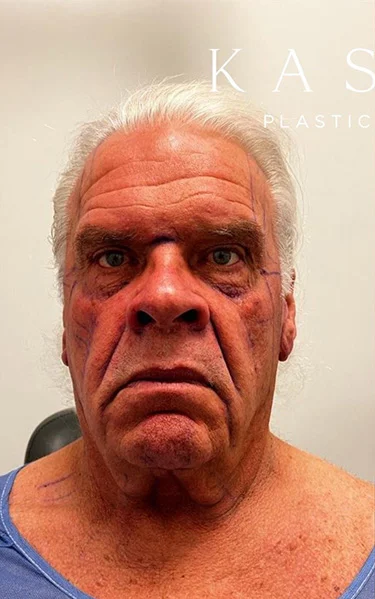
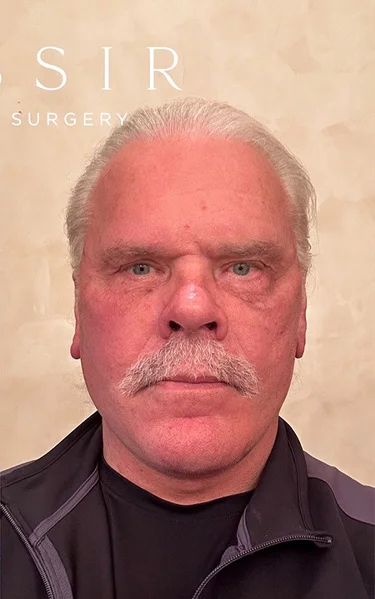
Our handsome patient only one month after Male Rhinoplasty.
See the amazing result.
Age: 70
Gender: Male
Procedure: Revision Deep Plane Face and Neck Lift, Revision Upper and Lower Blepharoplasty, Endoscopic Forehead and Brow Lift, Septo-Rhinoplasty, CO2 Laser Resurfacing, Fat Transfer to Face and Chin Augmentation
Concerns: Tired, aging look
Post-Op Photos: Taken 2 weeks after surgery
Before
After
Our lovely patient after a Designer Facelift.
See the amazing result.